OFFER: A BRAND NEW SERIES AND 5 FREEBIES FOR YOU!
Grab my new series, "Hearts Across the Frontier", and get 5 FREE novels as a gift! Have a look here!
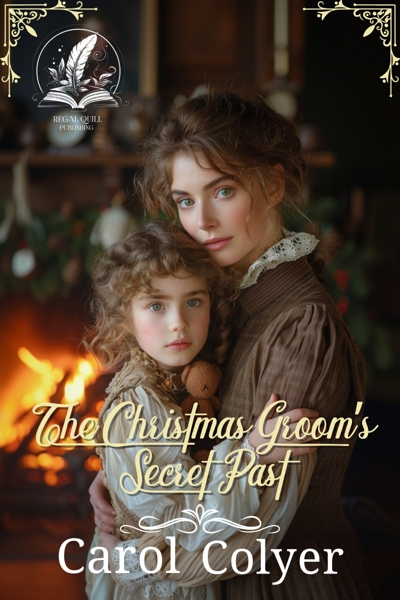
Prologue
December 1, 1873
Anna Carter scanned her classroom, ensuring that each of her students was working diligently, even little Micah Easley, who spent every quiet moment of his day dreaming up ways to prank the other students in his class.
It had been a long day, and she was grateful that her work was almost done. This was her last class and, after a quick glance at the brass clock on the mantle, she saw with relief that they were less than ten minutes until school would end.
The telegram had shaken her, and Anna Carter was a woman who prided herself on being unshakeable.
The Western Union message had been unsigned and far too dramatically mysterious. Dramatics were another thing Anna did not appreciate.
MEET MIDDAY TRAIN DECEMBER ONE STOP
EXPECT ARRIVAL STOP
Ever since receiving the message two days ago, she had been unable to get it out of her mind. It was postmarked from Las Vegas, a city that held no one she knew as far as she was aware, which only added to her unease.
Besides the overly pressing sense of mystery, there was the matter of the sentence that had gone unfinished: expect the arrival of what?
She had worn herself out questioning, wondering, and coming up with ideas of what it might be.
The chair in front of Micah’s fell to the floor with a clatter, and another boy spilled out of it, long, skinny legs windmilling through the air as he fell with a yelp.
Anna shook her head at herself; she was letting the children run wild while she was distracted. She quickly took charge of her classroom.
Five more minutes, and she’d be on her way to the train station and could put all of this nonsense to rest.
By the time the last child had left her classroom, it would require a quick pace to get to the train station in time before it arrived. She did not know what to expect, but she was certain she did not want to miss whatever it was.
She hurried down the road, ducking her head as she weaved through the busy street so as not to be distracted by anyone.
It didn’t work.
“Anna!” a voice called. “Anna, hold on a minute!”
Anna closed her eyes in irritation and then forced herself to smile before turning around.
The fake smile turned into a real one when she saw Rebecca running up to her, long dress skimming behind her, kicking up dirt from the street.
The two women embraced warmly.
“Your dress!” Anna pulled back to look at it, admiring the tiny stitched detail along the collar and hem. Rebecca was a master of the needle, and her skill shone in the red and green twirling stripes on her calico apron. For the first time all day, Anna forgot about the telegram as she squeezed her best friend’s hand. “It’s beautiful.”
“Enough about that,” Rebecca said dismissively, waving her hand, but Anna saw the way her cheeks pinkened with pride. “Let’s get to the train station!” She glanced at the large brass clock standing tall in the center of town where the crossroads met. “Just eight minutes until the midday train arrives.”
They fell into step together, an easy, comfortable silence settling between them as they walked to the train station.
That easy silence was broken when the new sheriff walked past them, tipping his wide-brimmed hat at them as he passed them by.
“Ladies,” he said, making eye contact with Rebecca first, and then Anna.
“Sheriff,” they said.
As they continued, Rebecca leaned into Anna. “He’s so handsome,” she whispered.
Anna glanced over her shoulder, noting his broad shoulders and dark curls. “You’re right, she agreed. Then she laughed. “I suppose you might find a reason to call for his help this week?”
“Oh, hush.” Rebecca laughed.
“I’ve never known you to be shy! What’s stopping you from inviting him to supper with you and your father to get to know him better?”
“You’re only trying to distract the two of us from your problems, and I won’t have it,” Rebecca said, looping her arm through Anna’s. “Now, I know you’re wondering about this telegram. But Christmas is coming now that it’s December, and I know how you feel about that. How have you been?”
Anna swallowed hard, just the word making tears threaten the back of her eyes. As always, this feeling was immediately followed by anger—anger at herself for her weakness, and anger at the two people who had betrayed her and ruined her life.
“I’m fine,” she lied.
“You’re not fine,” Rebecca said matter-of-factly. “Who would be, after what Claire and Edward did to you?”
Even now, three years later, their names were salt in a wound that refused to close.
“Claire and Edward were wrong,” Rebecca said flatly. “Any man who would run off with his fiancée’s best friend is a monster and a fool. Anyone could tell you that, and you’re better off without him.” She tilted her head. “Or her, for that matter. And luckily, with her gone, you were able to spend more time with me, and we make much better best friends than the two of you did.”
Anna squeezed her eyes shut, wanting this part of the conversation to be over.
“Perhaps we could move on?”
Rebecca sighed. “You’re not fine. Not yet. But one day, you will be. I know what happened to you ruined Christmas, but one day you’ll find yourself able to enjoy the holiday again. And when that time comes, I’ll stitch you a dress even more beautiful than mine.”
Anna slid a sideways glance at her, and Rebecca preened, lightly tapping the embroidery on her apron.
“Well then, with that as a motivation, how could I not?” Anna said dryly.
She was spared from Rebecca’s answer by the sound of the train approaching, the long blow of its whistle sounding through town.
They exchanged a look and quickened their pace, Rebecca’s grip on Anna’s arm tightening.
They were nearly at the entrance to the station when Rebecca hissed, “Look out, Margaret.”
They both ducked their heads, hunching their shoulders and rushing through the large open door to the station, eager to avoid Anna’s older sister and her constant judgment of their single, childless lives. They couldn’t even have a quick conversation with Margaret without her demanding to know when they would begin building what she called a “real” life of their own.
Margaret had lost her husband a few years ago and seemed to prefer focusing on their lives rather than her own.
Rebecca snuck a glance behind them. “She’s gone. She didn’t see us.”
There was no time for even a quick sigh of relief, however. The train had arrived.
“I’ll go down to the other end and look to be sure we don’t miss anything,” Rebecca said, and before Anna could stop her, she was gone in a woosh of long skirts, her face determined.
Anna stood tall, craning her neck to see as she twisted her fingers anxiously. She wasn’t sure what it was she was supposed to be looking for. She watched a coachman haul out a large steamer trunk, but an older couple claimed it and departed.
Santa Fe wasn’t the busiest station, but this was the busiest time of day, so she watched as families boarded, families departed, as luggage and animals and mail were all ferried to their proper places, and nothing at all seemed out of place or meant for her.
A glint of light sparking off a familiar shade of red-gold caught her attention, and she shaded her eyes, catching sight of a little girl standing alone on the platform.
Her hair was curled around her face in strawberry waves, so fine they shone in even the dim light of the station, and bright green eyes that were furrowed with worry as she looked around, lost and alone, clutching a worn teddy bear with a red ribbon tied around its neck. Anna did a double-take. She looked to be about four years old if Anna had to guess, with the soft, rounded cheeks and belly of a little girl. There was something familiar about her…
A tall, thin woman hurried up to the little girl, placing a hand on her shoulder. She looked exhausted and rumpled from their journey.
Now that she knew the little girl wasn’t alone, she could rest easy, but she found that she couldn’t tear her eyes away from her. What was it about her that was so familiar?
The woman nudged the girl forward, and they walked through the station, coming right toward Anna. When they were only a few paces away, Anna realized that the little girl had a slip of paper pinned to her chest, with large, darkened letters spelling out…Anna’s own name.
“Wait,” she said, almost involuntarily, as they grew closer to her. She stepped forward, questioning if she was doing the right thing. Surely this little girl wasn’t here for her? She looked between the woman and the little girl. “I’m Anna Carter.”
She stared at the words; they had been written over and over again so that they were bold and eye-catching. She read it again, black and stark as the feathers of a crow. Anna Carter.
The woman took her in and then nodded, pulling the little girl to a stop, who looked up at Anna curiously.
“Miss Carter,” the woman said, her voice steely and oddly formal, as if she expected she was being watched. “I’ve been sent by the estate of Mr. and Mrs. Edward Donovan.”
For the second time that day, their names were a punch in the gut—only this time, there was the added benefit of learning that they had indeed married. That was an invitation she hadn’t expected to receive, but still, she had enjoyed not knowing whether or not they had married after running off into the sunset together.
If she were being completely honest, a part of her had liked to imagine that they had fought, that they had been wracked with guilt over their betrayal, and had split, living alone and friendless far from home.
“Miss Carter?” the woman said impatiently.
“I’m sorry,” she said, though she was still so unsure of what was happening that she wasn’t sure she ought to be apologizing for anything. “How is it I can help you?”
“As I said, the Donovan estate has designated you as the legal guardian of their child. Following their deaths, they requested you take full responsibility for her care.” The woman swept her eyes over Anna once more, then her long, patrician nose wrinkled slightly. Then the whistle blew once more, and the conductor called.
“All aboard the westbound train,” he called, blowing his whistle. “Final call!”
The woman’s face cleared at once, and she dropped the small bag she was carrying onto the ground.
“All of the legal documents are here,” she said, gesturing to the sack. “That should take care of any questions you may have. If there’s nothing else then,” she said, straightening her coat. “Goodbye, Anna,” she said with a curt nod.
“Goodbye,” as Anna said it, she realized the little girl had spoken as well. Their eyes met, and Anna nearly stumbled into the pillar at her back.
The woman hesitated for a moment, tossing off one more thing like it was nothing but an afterthought. “Yes, her name is also Anna. Anna Belle Donovan.” Then she began striding across the platform once more.
Those eyes.
She knew them, of course, she did.
They were exactly like Claire’s.
Her heart began to pound as she looked at the girl more clearly. Her hair, rosy gold and fine as silk—Claire’s. The firmness to her chin and the set of her mouth—Edward’s.
Anna’s breath caught in her throat, and she found herself unable to draw in a breath.
“Wait!” she forced out, the word weak and airless. She waved at the woman, who was disappearing briskly through the train doors. “Wait, Mrs.—Miss—” she realized the woman had never given a name, hadn’t said really anything at all of any use.
Another whistle as the final passenger ran to catch the train, calling out to the conductor to wait, barely catching the train before the doors closed with a bang.
Anna watched in shock as it began to move, all of the answers to her many, many questions, chugging down the tracks, westbound.
Rebecca appeared in front of her.
“I’m sorry, I got to talking with Mrs. May and couldn’t get away. Did the package arrive?” Rebecca took in the little girl and smiled immediately, warm and welcoming. “And who’s this, then?”
“Anna,” the girl said, her voice sweet and clear.
“This is Anna Belle Donovan,” Anna said, her throat dry. “I’ve been…I’ve been named her guardian, following the deaths of her parents.”
Donovan.
Anna felt the name strike her like a stone, sharp, cold, and too fast to dodge. Her breath hitched. She didn’t mean for it to. But there it was.
Donovan.
Rebecca stared at her in shock, and for once, her friend said nothing.
Anna looked again at the girl. She had her mother’s eyes, her mother’s hair, and Edward’s features, his body type, long and slim.
And the girl…the girl had her name.
Anna’s throat felt thick.
Rebecca stepped in, like she always did when Anna faltered. “Come on then,” she said briskly, offering her hand to the girl. “Let’s get you out of here and into somewhere warm.”
The little girl hesitated, but her fingers reached up slowly and took Rebecca’s hand.
She looked uncertainly from the train to the road, her little face unsure.
“It’s not very far at all,” Rebecca said, squeezing gently. “You’ll like Anna’s house. Her father is there, and he’s very nice. He once built me a set of shelves for my dishes just because I said I didn’t have one. And he makes the best tea this side of the territory.”
Anna fell in step beside them as they turned toward the end of town, her thoughts buzzing louder than the wind through the bare trees. She didn’t speak. She couldn’t. The girl’s small hand was now clasped in Rebecca’s, and the little stuffed bear with the worn fur was tucked under one arm, one glass eye looking back at Anna like it knew something she didn’t.
It took everything in her not to cry.
She filled Rebecca in on the brief, strange exchange with the woman at the station as they walked, and Rebecca remained uncharacteristically quiet as she took it all in, but her hand stayed tight on the child’s.
By the time they reached the house, Anna’s boots were caked with cold mud, and her nerves were strung taut.
She wasn’t sure how she was supposed to come to terms with any of this, starting with the fact that, apparently, the man and woman who had broken her heart together had died.
The forge was glowing out back, sending curls of smoke into the pale afternoon sky. Her father was hammering something on the anvil, sleeves rolled up, face streaked with soot and concentration. The sound rang across the yard, sharp and steady.
He looked up when he heard the gate creak open.
His eyes flicked to Anna first, then Rebecca, then the little girl between them. He said nothing at first, simply set down the hammer and wiped his hands on a cloth tucked into his belt.
“Well now,” he said, voice low and warm, “who’s this?”
The girl clung tighter to Rebecca’s hand, half-hiding behind her.
“She’s…” Anna started, but the words stumbled over each other, mingling in her head, impossible to straighten out.
Rebecca didn’t wait for her to find them. “This is Anna Belle Donovan,” she said. “She’s just arrived by train. And she’s going to stay with our Anna for a little while.”
Albert’s brow lifted just slightly. He glanced back at his daughter but didn’t press.
“Well then,” he said, crouching down slightly to be at the girl’s eye level. “That’s a fine name. Real elegant. I’m Albert. But if you want, you can call me Al.”
Anna Belle’s lips tugged upward, barely, but it was a smile nonetheless.
“That’s a very small bear you’ve got there,” Albert added, nodding toward it. “He got a name?”
The girl blinked. “His name is Buttons.”
“Buttons. Now that’s a proper name for a bear.”
The smile grew a little wider.
Albert straightened, brushing his palms together. “I was just about to make some tea. Do you like tea?”
Anna Belle nodded.
Rebecca beamed. “Then let’s go inside.”
They all followed Albert in, and Anna found herself looking at its familiar interior with new eyes, wondering what little Anna saw.
The house wasn’t decorated. She hadn’t decorated for Christmas since the year Edward announced that he and Claire had fallen in love and were leaving Santa Fe “in search of a better life”.
She had stood there, the house warm and aglow, wrapped presents and full stockings and drippings of foolish, stupid merriment everywhere she looked, as he had taken everything she had known and ripped it to pieces.
When his hand had cupped her cheek as he had said goodbye, tenderly and full of pity, which almost made the whole thing even worse, she had wanted to rip every last thing down and burn it all.
And once he had left, that’s precisely what she did.
In her house today, with Christmas just right around the corner, there was not one sprig of pine. No holly. No candles. No wreath. The hearth was swept clean but cold. The lace curtain at the window hung limp in the stillness. It was tidy, as always, but she was struck for the first time by how cold and empty it was.
“Anna,” Rebecca muttered under her breath as they stepped inside. “It’s the Christmas season.”
Anna removed her gloves. “And?”
“And it looks like a funeral in here.”
“I’m aware.”
Rebecca sighed. “We’re going to need to fix that later.”
Anna shot her a warning look. There would be no Christmas decorating in her house, her sanctuary. This was her place of respite away from all the holly and tinsel in town.
Albert helped the little girl shrug off her coat while Anna fetched a blanket and a chair.
As he passed her, he put a warm hand on her shoulder and pressed a piece of paper into her palm. “This was sticking out of that bag,” he murmured. “It’s addressed to you.”
Rebecca, never one to wait for permission, went straight to the kitchen to see what could be made into a meal.
Anna crouched beside the chair and looked at the girl properly for the first time since the station.
“Are you cold?” she asked.
The girl shook her head.
“Do you want to sit here, by the fire? I’ll light it in a moment.”
The girl nodded.
Anna hesitated, then said gently, “Is there anything else you need right now?”
Anna Belle’s arms tightened around her bear. “No. Just Buttons.”
Anna nodded. “He’s welcome here, too. We will make sure you both have everything that you need.”
A kettle clanked in the kitchen. The smell of onions and root vegetables started to drift through the air. Anna moved to the table, opened the paper Albert had pulled from the girl’s bag, and read it once. And then again.
It was short. Too short.
A formal letter from the lawyer’s office, stating that the child of Edward Donovan and Claire—Claire—had been placed into the sole care of Anna Carter, as per the final request of the deceased parents. No mention of how or why they died. No timeline. No alternate guardian or inheritance listed.
Not to go to anyone else for as long as Anna lives.
She opened the sack and dug through, but it only contained paperwork identifying Anna Belle Donovan and a few small items of clothing. There was nothing else.
If only there were other family members she could reach out to. She and Claire had bonded so strongly because Claire had been nearly alone in the world except for her father, a drunk who had died early, and Edward’s parents had died just weeks before he had proposed to Anna.
Anna folded the paper and stared at the tabletop. She was in this alone.
Rebecca came back in, sleeves rolled up, holding a spoon like a saber. “There was some stew in the icebox and cornbread that’s still fresh. I’m making supper. Sit down before you fall over.”
Anna didn’t move. Perhaps she wasn’t as alone as she had thought.
“What am I going to do?” she asked, barely above a whisper.
Rebecca handed her a dishcloth. “You’re going to breathe. And then you’re going to eat. And then we’re going to figure out what to do next. Like we always do.”
Anna looked toward the chair, where Anna Belle was now sitting quietly, rocking the bear in her arms like a mother would a baby.
“She looks like him,” Anna whispered. “Like both of them.”
“I know.”
“They named her after me.”
“I know.”
“And they left her to me, of all people.”
“Ironic,” Rebecca said. “Or maybe redemptive. I haven’t decided.”
Supper was quiet at first. Anna Belle didn’t speak much, but she ate what was placed in front of her, drank warm tea from a chipped cup, and didn’t complain. She held the bear in her lap the entire time.
Afterward, as Rebecca and Albert cleared dishes, Anna sat beside the girl on the edge of the hearth.
She folded her hands in her lap and said, “My name is Anna, too. But I think we’ll get confused if we’re both called that.”
The girl looked up. “Mama used to call me Anna Belle when she was mad.”
Anna smiled faintly. “How about we call you that all the time? Anna Belle. I like the sound of it. And would you feel alright calling me Miss Anna?”
The girl nodded, and something eased in her shoulders. Two questions answered.
Anna’s eyes drifted down to the stuffed bear resting in the child’s arms. Its fur was patchy in places, one of the seams along its belly visibly stretched.
“That’s quite a bear,” she said.
Anna Belle hugged it closer. “He’s mine. Mama and Papa gave him to me. Right before…”
Her voice cracked, just slightly.
Anna waited.
“They said I had to be brave. That Buttons would keep me safe. That I couldn’t lose him.”
Anna blinked hard, the words catching her off guard.
“They loved you very much,” she said quietly, knowing it was the truth, no matter what her own opinions were of the two. She ached to know what had happened to them, what had made them send their only child to her, and how they had known their ends were coming.
Anna Belle nodded, and Buttons stared out over the firelight, his one glass eye catching the glow.
She stared at the little girl, cheeks pinkened from the warmth of the fire, eyes brighter but still unsure, and wondered what in the world she was going to do now.
Chapter 1
December 2, 1875
The horse didn’t care that it was a few weeks to Christmas, and in truth, neither did Tyler.
The wind bit just the same, and the sun still ducked behind the Sangre de Cristos by midafternoon, casting long blue shadows over the snow-packed road as Tyler Steele rode into Santa Fe.
He tugged his coat collar higher and shifted in the saddle. The town ahead was laid out in a way that was familiar to him, its low adobe buildings with whitewashed walls and heavy wooden beams jutting beneath terracotta tile roofs in a scene he recognized. The streets weren’t paved, just rutted, hard-packed earth dusted in snow, lined with wagon tracks and muddy boot prints.
He’d passed a Catholic mission with a creaky bell tower on the outskirts. Now, closer to the main plaza in the center of town, the smell of fresh bread from a panadería mingled with coal smoke from the chimneys. Spanish echoed through an alley behind a mercantile, punctuated by the occasional bark of a dog or the clatter of wagon wheels.
The plaza was alive with movement, with children running past with paper lanterns, traders hawking wool blankets and dulces out of crates, the occasional burst of fiddle music floating from a saloon doorway. But under all of it was that strange stillness small towns got around Christmas.
In the past, Tyler would have imagined it that was because they were all busy anticipating a happy holiday.
Now, he assumed it was everyone bracing for the ache of who wouldn’t be celebrating with them, like he was.
He kept his eyes moving, searching. It had become his new normal. As a bounty hunter, he had always been alert and aware of his surroundings, but since Wes…
Sleep had become difficult, nearly impossible most evenings, with his time spent staring into his fire or cleaning his firearms, or plotting and hunting for the man responsible for all of it.
The decorations in town were modest, fresh pine garlands strung above store windows, dusty red bows, a manger scene near the cathedral with one chipped wise man missing an arm. Someone had set out luminarias early: little paper sacks with candles burning low, lining the edge of the road like flickering sentries.
It should’ve felt festive.
It didn’t.
This would be his first Christmas without Wes.
Tyler blinked against the sting of the cold. Wes had always liked Christmas, even when they were living out of saddlebags and sleeping rough. He’d make jokes about caroling in exchange for whiskey and whistle “Silent Night” so off-key it made dogs howl. He was the one who’d kept things light. Now he was gone, shot in the back by someone they’d been hunting for over a year.
To make matters worse, Tyler didn’t know the face or the name of the man he was on the hunt for. All he had to go off of were the bits of information they had gathered over the months they’d spent hunting the smuggling ring down. One of those pieces, one of the last pieces he’d discovered during a surveillance run, was that they were planning to meet in Santa Fe after running enough towns down the train line.
He knew they were targeting the trains, and he knew they’d end up here. It was a pitiful amount of intel to show for months of work, especially considering he and Wes had been two of the best bounty hunters in the West back before it had all gone wrong.
A wagon groaned past on the road beside him, piled high with firewood. The road narrowed between the mercantile and the blacksmith, and Tyler reined his horse in to let the wagon pass.
That’s when a figure stumbled out of the alley, half-drunk, swinging his arms like he meant to fight the air. Tyler jerked his horse to the side, barely avoiding colliding with him.
“Watch where you—!” the man slurred, squinting up at him.
“Frankie,” interrupted a sharp voice. “That’s enough, now.”
Another man stepped into view, this one broad-shouldered and tall, with a dark coat and a tin star pinned to his vest.
Sheriff.
Tyler immediately went still.
The sheriff grabbed the drunk by the collar with a well-practiced hand. “Frankie gets two bottles in him and thinks he’s Jesse James,” he said to Tyler without smiling, though there was humor in his eyes. “You alright?”
“Fine,” Tyler said shortly, eager to keep moving.
It was a new feeling for him, to be uncomfortable around a lawman. What he wanted to do was tell this man everything and get himself another pair of eyes, well, ears, he supposed, on the lookout for the man who had killed Wes. But he didn’t know this sheriff from Adam, didn’t know anything about Santa Fe, and for all he knew, they could be in cahoots. He’d heard tell of lots of small-town sheriffs who would rather turn a blind eye and fill their pockets than risk their lives protecting their town.
The sheriff gave him a glance, not casual and not a welcome, either. It was a look Tyler recognized. The man was sizing him up and trying to get a sense of him. Tyler straightened in his saddle and kept his face blank.
“You’re not from around here,” the man said, his voice easy.
“No, sir.”
“Just traveling through?”
“Maybe.” Tyler glanced behind him at the road beyond, eager to keep moving, eager to escape this interaction and all of its questions.
“Lot of people pass through this time of year,” the sheriff said thoughtfully, resettling his hat. Under his arm, the drunk flailed, one final, pitiful attempt to free himself. The sheriff didn’t even glance down as he kept his grip with ease. “Most of them are heading somewhere. You don’t strike me as someone just visiting our little town to celebrate the season.”
Tyler gave a humorless smile. “I suppose you’re right. I don’t much care for tinsel.”
“Fair enough.” The sheriff looked him over again. “Have you got kinfolk here?”
“No.” He let the answer land, fighting to keep the annoyance from rising on his face.
The sheriff didn’t blink, but Tyler saw the tic in his jaw. Still suspicious.
“Seems odd to visit somewhere around Christmas where you’ve got no family to celebrate with.”
Tyler shrugged, knowing there was not much he could say in response to that, and also knowing it was better not to say too much.
“Have you got a place to stay?”
“Not yet.”
“Try Miss Lottie’s. Water Street, near the old acequia. She doesn’t take in gamblers or men who lie about their names.” He gave a pointed look. “You clean?”
“Always.”
The sheriff gave a grunt. “Alright, then. Keep your head down and don’t stir up dust. We’ll get along just fine.”
He turned, dragging Frankie by the elbow toward the jailhouse.
Tyler watched them go. The sheriff walked like a man with too much to do and not enough time to get it done, but there was something steady about him. Tyler couldn’t be sure about him, but he was sure that he had made the mistake of getting noticed by the town lawman right away, and he’d have to be quick about giving himself a believable reason to be skulking around town until he’d done what he came here to do.
It was nearly sundown by the time he made it to Water Street.
Miss Lottie’s boarding house stood at the edge of the quiet district, where the air smelled of mesquite smoke and melted snow. The acequia—a narrow irrigation ditch running through the back lanes—gurgled faintly behind the property.
The boarding house was two stories of thick adobe, blue-painted shutters drawn open to let in the last of the light. A sign swung above the door:
Rooms for Let
Respectable Company Only
Tyler dismounted, tied his horse near the woodpile, and went carefully up the porch steps. He knocked once.
A compact, middle-aged woman opened the door, and when she spoke, her words were as sharp as vinegar and followed a rapid-fire pattern.
“Miss Lottie?” he asked.
She stared at him. “You looking for a room or directions?”
“A room.”
“No trouble?”
“No, ma’am.”
“You drink?”
“Not much.”
“You talk in your sleep?”
He blinked. “I try not to.”
“Gamble?”
He knew the right answer to that question thanks to the sheriff. “Never.” It was a lie; most of his life had been a gamble in truth, but she didn’t need to ever find out.
She gave him a dry nod. “Room’s twelve cents a night. Meals included. Rules are simple: don’t slam doors, no guns on the table, and if you track in mud, you mop it.”
He handed over the coins, and she counted them, taking her time and doing it twice before she nodded at him.
“End of the hall, upstairs,” she said, handing him a key. “Supper’s at five sharp. Don’t make me come get you.”
The room was small but clean. It had all the basics, and even a little more than he was used to, especially since he and Wes had spent most nights camped by their horses. There was a wool rug, a pine washstand, a feather-stuffed mattress, and a window that looked out over the alley. Pale light filtered through sheer curtains, touching the copper basin and the iron crucifix nailed to the wall.
He didn’t have much to unpack, but he went through his things, hanging his coat and hat on the peg and checking his rifle, making sure not to put it on the table in accordance with the rules.
Then he reached into the satchel and pulled out the tin-type photo, the only thing among his few possessions that held real value, though it couldn’t be valued in coins. He hadn’t looked at it since Durango.
In it, he and Wes stood together, both young, both dirty, both grinning like fools on the tail end of a successful case. Tyler remembered the wind that day, how Wes had said it smelled like snow and danger, and how right he’d been.
Tyler pressed the edge of the tin tight between his fingers. “You should be here,” he muttered.
Then something snapped.
Crack.
The window shattered, and glass exploded inward in a sudden burst.
Tyler dropped, rolling to the side. His rifle was in his hand before his back hit the floor.
Silence followed, and he waited on the floor, alert and ready for whatever came next.
All he could hear was the sound of the cold, sharp wind blowing in through the broken window. One curtain flapped like a dying flag, and shards of glass glinted on the wooden floor.
He crawled to the edge, keeping low as he peered out.
There was no movement below, not a shadow to be seen. Just the alley, half-melted snow reflecting the dull orange of lantern light from the street.
He waited, but nothing else happened.
There was a chance it had been an accident, or some sort of odd coincidence, but Tyler had a feeling that that bullet had been meant to send him a message, which meant someone had known which room he’d be in.
Which meant someone had been watching him.
OFFER: A BRAND NEW SERIES AND 5 FREEBIES FOR YOU!
Grab my new series, "Hearts Across the Frontier", and get 5 FREE novels as a gift! Have a look here!
Hi, lovely readers! I hope you enjoyed the preview. I can’t wait to hear your comments. Thank you 🙂